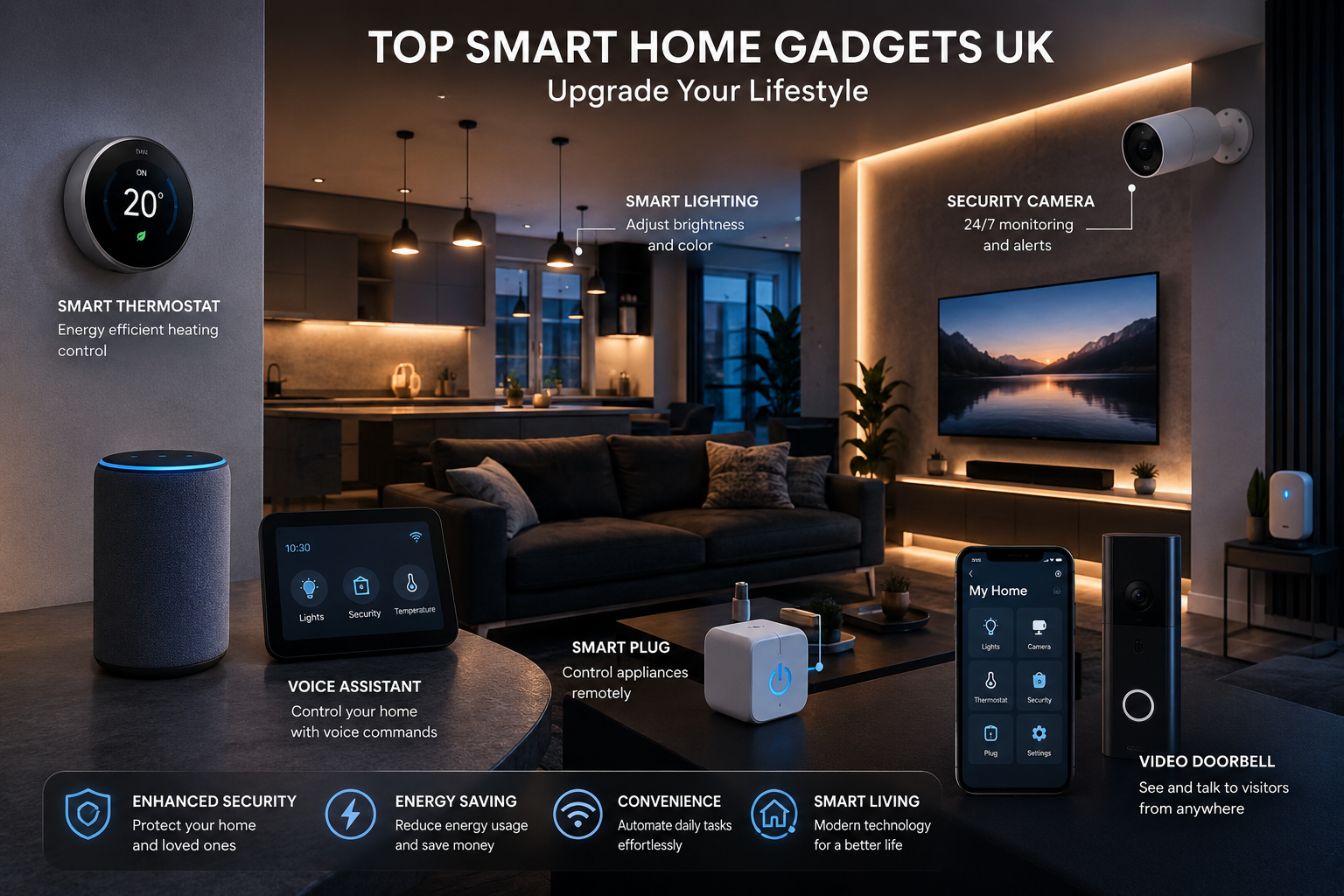
Smart technology has completely transformed modern living in recent years, and homeowners across the UK are now investing heavily in devices that improve comfort, security, convenience, and energy efficiency. From voice-controlled assistants to intelligent lighting systems and automated security cameras, the demand for smart home gadgets UK consumers trust continues to grow rapidly. These gadgets are no longer considered luxury products only for tech enthusiasts. Today, they have become practical everyday solutions that help families save time, reduce electricity bills, and create more connected living spaces.
The UK smart home market continues expanding as more people adopt automation technology in apartments, family homes, and even small rental properties. Smart devices are now easier to install, more affordable, and highly compatible with each other. Whether you want to improve home security, control your heating remotely, or simply enjoy hands-free entertainment, smart home technology can significantly improve your lifestyle.
In this detailed guide, we will explore the best smart home gadgets available in the UK, how they work, their benefits, and why they are becoming essential for modern households.
Why Smart Home Gadgets Are Becoming Popular in the UK
The popularity of smart home gadgets UK residents buy today is driven by convenience and efficiency. Modern lifestyles are busy, and people want solutions that simplify daily routines. Smart devices allow homeowners to automate repetitive tasks such as switching off lights, adjusting heating, locking doors, and monitoring home security from anywhere using smartphones.
Energy efficiency is another major factor behind the rise of smart home technology in the UK. With electricity and gas prices increasing, homeowners are looking for ways to reduce energy consumption. Smart thermostats and intelligent lighting systems help users monitor and optimize energy usage, resulting in lower utility bills. Many devices also include energy reports that help households understand their consumption patterns.
Security concerns also encourage people to install smart devices. Video doorbells, motion sensors, and wireless security cameras provide real-time alerts and remote access, allowing homeowners to monitor their properties while away. These features create peace of mind, especially for families and people who travel frequently.
The growing compatibility between devices is also making smart homes easier to build. Products now work together through ecosystems such as Amazon Alexa, Google Assistant, and Apple HomeKit. This means users can control multiple devices using simple voice commands or centralized mobile apps.
Smart Speakers and Voice Assistants for Everyday Convenience
Smart speakers are often the first device people purchase when creating a smart home. They act as central control hubs that connect with other smart gadgets and allow voice-controlled automation throughout the house. Devices like Amazon Echo and Google Nest have become extremely popular across the UK because they make everyday tasks faster and easier.
Voice assistants can play music, provide weather updates, create reminders, answer questions, and control connected smart devices. For example, you can ask your assistant to turn off lights, lower the heating temperature, or lock the front door without touching a switch. This hands-free functionality is especially useful during busy mornings or while cooking.
Many UK households now use voice assistants for entertainment purposes as well. Smart speakers can stream music from Spotify, Apple Music, or YouTube Music while connecting seamlessly with televisions and home theater systems. Multi-room speaker setups also allow users to enjoy synchronized audio throughout the house.
Another reason smart speakers are among the top smart home gadgets UK consumers choose is affordability. Entry-level devices are relatively inexpensive and easy to set up. Even users with limited technical experience can connect and operate them within minutes.
Voice recognition technology has also improved dramatically in recent years. Smart assistants now understand accents and natural speech more accurately, making them more reliable for everyday use.
Smart Lighting Systems That Improve Comfort and Efficiency
Smart lighting has become one of the most practical and energy-efficient upgrades for modern homes. Traditional light bulbs are rapidly being replaced by smart LED lighting systems that can be controlled remotely using smartphones or voice assistants.
One of the biggest advantages of smart lighting is customization. Users can adjust brightness levels, schedule automatic on-and-off times, and even change color temperatures depending on mood or activity. Warm lighting can create a relaxing atmosphere during evenings, while brighter white tones improve focus during work or study sessions.
Energy efficiency is another major benefit. Smart LED bulbs consume significantly less electricity than traditional bulbs and last much longer. Motion sensors and automation schedules prevent lights from being left on unnecessarily, helping reduce monthly electricity costs.
For UK homeowners concerned about security, smart lighting also offers additional protection. Lights can automatically turn on when motion is detected or simulate occupancy while homeowners are away. This creates the impression that someone is at home, discouraging potential intruders.
Installation is usually simple, especially with wireless systems. Many smart bulbs connect directly to Wi-Fi without requiring complicated wiring. This makes them ideal for both homeowners and renters who want modern automation without major modifications.
The flexibility of smart lighting makes it one of the best investments for creating a connected and comfortable home environment.
Smart Security Cameras and Video Doorbells
Home security technology has advanced significantly, and smart cameras are now among the most essential smart home gadgets UK households use today. Wireless security systems allow homeowners to monitor their property in real time from anywhere using smartphones or tablets.
Video doorbells are especially popular because they combine convenience with security. These devices allow users to see visitors, communicate through two-way audio, and receive alerts when someone approaches the front door. Whether receiving deliveries or checking suspicious activity, video doorbells provide valuable peace of mind.
Indoor and outdoor security cameras offer high-definition video recording, night vision, and motion detection. Some advanced models also include artificial intelligence features capable of distinguishing between humans, animals, and vehicles. This reduces unnecessary alerts and improves monitoring accuracy.
Cloud storage options allow footage to be saved securely and accessed later if needed. Many systems also integrate with other smart devices such as alarms, lighting systems, and smart locks to create complete home security ecosystems.
For families living in urban UK areas, smart security systems are becoming increasingly important due to rising concerns about package theft and property safety. The ability to monitor a home remotely at any time offers reassurance and better control over household security.
Modern security devices are also more affordable than traditional professionally installed systems, making them accessible to a wider range of consumers.
Smart Thermostats for Better Energy Management
Heating costs are a major concern for UK households, especially during colder months. Smart thermostats have emerged as one of the most valuable smart home gadgets UK consumers use to improve energy efficiency and reduce utility expenses.
Unlike traditional thermostats, smart versions learn user behavior and automatically adjust temperatures for maximum efficiency. They can detect when people leave the house and reduce heating usage accordingly. Users can also control temperatures remotely through smartphone apps, ensuring homes are warm before arrival without wasting energy throughout the day.
Energy reports and analytics help homeowners understand their heating patterns and identify opportunities for savings. Some smart thermostats even provide recommendations for optimizing energy consumption based on weather conditions and usage habits.
Integration with voice assistants further improves convenience. Users can adjust room temperatures using simple voice commands instead of manually operating heating systems.
Another major benefit is zoning control. Advanced systems allow different rooms to maintain different temperatures, preventing unnecessary heating in unused spaces. This feature can significantly reduce gas and electricity bills over time.
As energy efficiency becomes increasingly important in the UK, smart thermostats are expected to remain among the most popular home automation investments.
Smart Kitchen Gadgets Changing Modern Cooking
The kitchen has become one of the most technologically advanced areas in modern homes. Smart kitchen gadgets simplify cooking, improve food storage, and enhance convenience for busy households.
Smart refrigerators now include features such as internal cameras, touchscreen displays, and inventory tracking. Users can check fridge contents remotely while shopping, reducing unnecessary purchases and food waste. Some models can even suggest recipes based on available ingredients.
Smart coffee makers allow users to schedule brewing times through mobile apps, ensuring fresh coffee is ready every morning. Wi-Fi-enabled ovens and air fryers also provide remote control features, allowing users to preheat appliances or monitor cooking progress from other rooms.
Voice-controlled kitchen assistants are also becoming increasingly common. These devices can set cooking timers, convert measurements, provide recipe instructions, and manage shopping lists hands-free while users cook.
Energy efficiency is another benefit of modern smart kitchen appliances. Many devices optimize power usage automatically, helping households lower electricity consumption without sacrificing performance.
The integration of artificial intelligence and automation continues transforming kitchen experiences, making meal preparation faster, smarter, and more enjoyable.
Smart Plugs and Home Automation Devices
Smart plugs are among the simplest yet most effective smart home gadgets available in the UK. These affordable devices allow traditional appliances to become smart-enabled by connecting them to Wi-Fi networks and mobile apps.
Users can remotely control lamps, fans, coffee machines, televisions, and other electronic devices from smartphones or voice assistants. Scheduling features allow appliances to switch on or off automatically based on daily routines.
Smart plugs are particularly useful for reducing energy waste. Devices that consume standby power can be turned off remotely, lowering electricity bills over time. Automation schedules also improve convenience by ensuring appliances operate only when needed.
Home automation hubs further expand functionality by connecting multiple smart devices into a unified ecosystem. These hubs allow homeowners to create routines such as “Good Morning” or “Good Night” modes that automatically adjust lighting, heating, and security settings simultaneously.
Automation improves efficiency while reducing the need for manual adjustments throughout the day. As compatibility between devices improves, building comprehensive smart home systems becomes increasingly accessible for average consumers.
Smart Entertainment Systems for Modern Homes
Entertainment technology has evolved rapidly, and smart home systems now offer immersive experiences for music, movies, and gaming. Smart TVs, wireless speakers, streaming devices, and automated home theaters are transforming living rooms across the UK.
Smart televisions provide direct access to streaming services such as Netflix, Disney+, Prime Video, and YouTube without requiring additional hardware. Voice control integration allows users to search content, adjust volume, and switch channels effortlessly.
Wireless multi-room audio systems enable synchronized music playback throughout the house. Users can play different songs in separate rooms or create whole-home audio experiences for gatherings and parties.
Gaming setups have also become more advanced with smart lighting synchronization, voice controls, and automated entertainment routines. Smart systems can dim lights, close blinds, and power on devices automatically when movie or gaming modes are activated.
Home entertainment automation not only improves convenience but also creates more enjoyable and personalized leisure experiences for families and guests.
Benefits of Investing in Smart Home Gadgets UK
There are many reasons why homeowners continue investing in smart home gadgets UK technology. The biggest benefit is convenience. Automation eliminates repetitive tasks and simplifies household management, allowing users to focus on more important activities.
Security improvements are another major advantage. Smart cameras, locks, alarms, and sensors provide continuous monitoring and instant notifications, helping protect homes and families more effectively.
Energy savings also make smart technology financially beneficial in the long term. Devices such as smart thermostats and LED lighting systems reduce electricity and heating costs significantly over time.
Accessibility improvements are especially valuable for elderly individuals and people with mobility challenges. Voice-controlled devices and automated systems make daily activities easier and safer without requiring physical effort.
Property value can also increase with smart home installations. Modern buyers increasingly prefer homes equipped with automation systems, making smart upgrades attractive investments for future resale opportunities.
The continuous advancement of artificial intelligence and connectivity will likely make smart homes even more intelligent and efficient in the coming years.
How to Choose the Best Smart Home Gadgets
Choosing the right smart devices depends on budget, lifestyle, and compatibility preferences. Homeowners should first identify which areas of daily life they want to improve most, whether security, energy efficiency, entertainment, or convenience.
Compatibility is one of the most important factors. Devices should work seamlessly with existing ecosystems such as Amazon Alexa, Google Assistant, or Apple HomeKit. Choosing compatible products ensures smoother integration and easier control.
Internet connectivity and reliability are also crucial. Smart devices depend heavily on stable Wi-Fi connections, so strong network coverage throughout the house is essential.
Consumers should also consider data privacy and cybersecurity. Purchasing products from reputable brands with strong encryption and regular software updates helps protect personal information and prevent security vulnerabilities.
Budget planning is equally important. Starting with essential devices such as smart speakers, lighting, or thermostats allows users to gradually expand their systems over time without large upfront expenses.
Reading customer reviews and comparing features carefully can help buyers select products that offer the best value and reliability.
The Future of Smart Home Technology in the UK
The future of smart home gadgets UK consumers will use looks incredibly promising. Artificial intelligence, machine learning, and automation technologies continue evolving rapidly, creating smarter and more personalized home experiences.
Future smart homes will likely include deeper automation capabilities where devices predict user preferences and adapt automatically without manual input. AI-powered systems may learn daily routines, optimize energy consumption, and enhance comfort based on behavior patterns.
Health-focused smart devices are also expected to grow in popularity. Sensors capable of monitoring air quality, sleep patterns, and elderly care needs could become standard features in modern homes.
Sustainability will play an increasingly important role as well. Smart energy management systems connected to solar panels and electric vehicle chargers may help households reduce environmental impact while lowering costs.
The expansion of 5G networks across the UK will further improve device connectivity, enabling faster communication between smart systems and creating more reliable automation experiences.
As technology continues advancing, smart homes will become more intelligent, efficient, and accessible for households of all sizes and budgets.
Conclusion
The rise of smart home gadgets UK homeowners are adopting today reflects a major shift toward convenience, efficiency, security, and modern living. From smart speakers and intelligent lighting to advanced security systems and automated heating controls, these devices are transforming ordinary houses into connected living environments.
Smart home technology offers practical solutions for everyday challenges while helping users save time, reduce energy bills, and improve overall comfort. As devices become more affordable and easier to use, smart homes are no longer futuristic concepts reserved for technology enthusiasts. They are quickly becoming standard features of modern households across the UK.
Whether you are starting with a simple smart speaker or building a fully automated home ecosystem, investing in smart technology can significantly upgrade your lifestyle. With continuous advancements in artificial intelligence and connectivity, the future of smart homes looks more exciting than ever.