
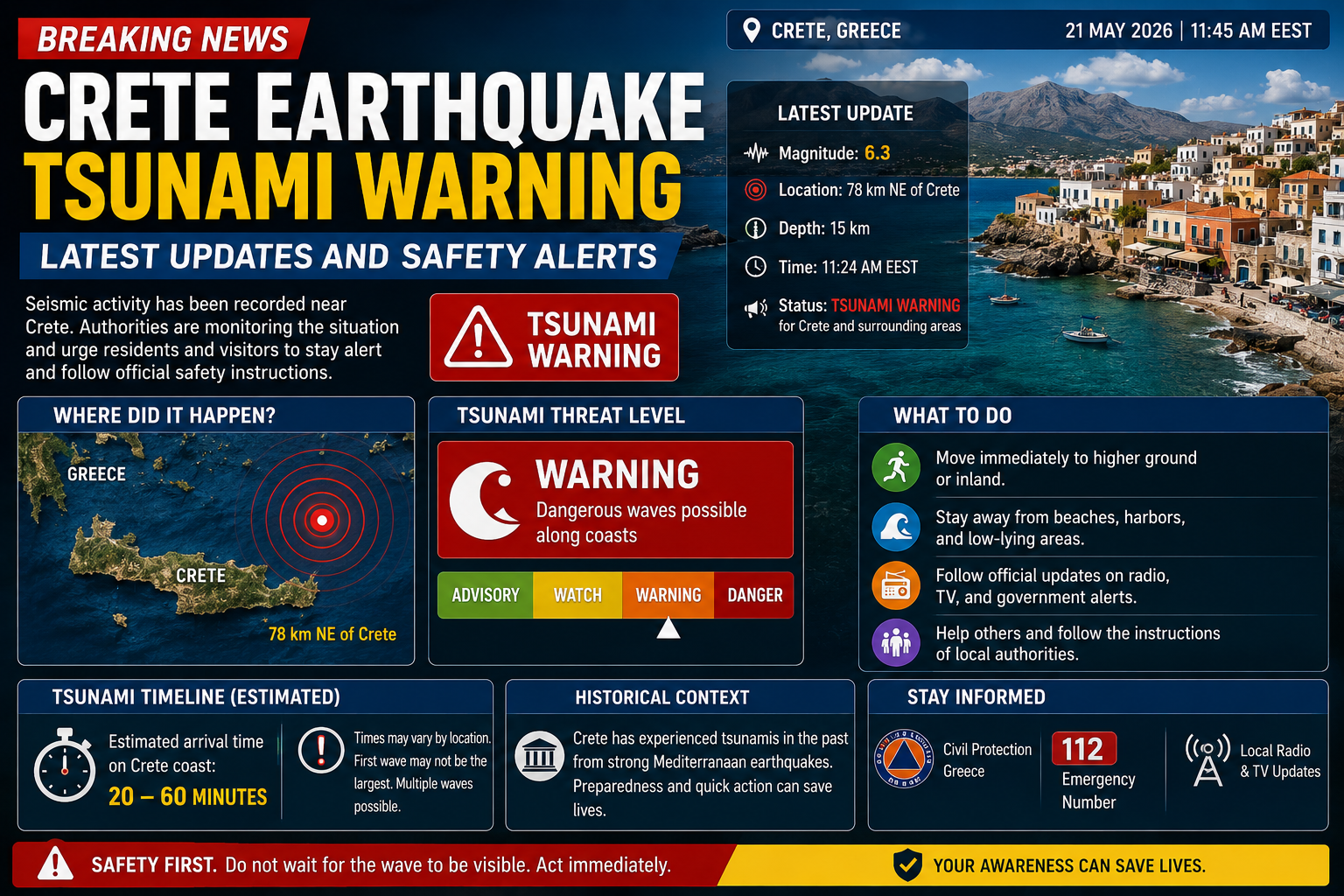
The recent discussions surrounding the crete earthquake tsunami warning have captured global attention as seismic activity in the Mediterranean region continues to raise concerns among residents, travelers, and emergency response teams. Crete, the largest Greek island, lies in one of Europe’s most active earthquake zones, making earthquake preparedness and tsunami awareness extremely important for everyone living in or visiting the area. Whenever strong undersea earthquakes occur near Crete, authorities quickly evaluate the possibility of tsunami waves reaching nearby coastlines. These warnings are designed to protect lives and minimize panic by providing clear safety instructions and emergency guidance.
Over the years, the Mediterranean Sea has experienced several powerful earthquakes that triggered tsunami alerts across coastal communities. While not every earthquake leads to a destructive tsunami, the threat remains real due to the region’s geological structure. Understanding how tsunami warnings work, why Crete is vulnerable to earthquakes, and what safety measures people should follow can help communities respond more effectively during emergencies. This article explores the latest developments regarding the Crete earthquake tsunami warning, explains the science behind these natural disasters, and provides detailed safety advice for residents and tourists.
Why Crete Is Prone to Earthquakes and Tsunami Risks
Crete is located near the boundary where the African tectonic plate moves beneath the Eurasian plate. This geological process, known as subduction, creates enormous pressure beneath the Earth’s surface. When that pressure is suddenly released, earthquakes occur. Because many of these earthquakes happen underwater, they can displace large amounts of seawater and potentially generate tsunamis.
The Mediterranean region may not experience tsunamis as frequently as the Pacific Ocean, but scientists consider the area highly vulnerable because of its active seismic zones. Crete’s position near the Hellenic Arc makes it one of the most earthquake-prone areas in Europe. The island has experienced numerous significant earthquakes throughout history, some of which caused widespread destruction and panic among coastal populations.
Modern monitoring systems now allow scientists to detect seismic activity quickly and issue warnings within minutes. However, the speed at which tsunami waves travel means that nearby coastal communities may have very little time to react. This is why public awareness and emergency preparedness are critical elements of disaster management in Crete and surrounding regions.
Understanding the Crete Earthquake Tsunami Warning System
The crete earthquake tsunami warning system relies on advanced seismic monitoring technology, ocean sensors, and communication networks. When a powerful undersea earthquake occurs, experts immediately analyze the quake’s magnitude, depth, and location to determine whether it could trigger a tsunami. If there is a risk, authorities issue alerts through television broadcasts, mobile notifications, radio systems, and emergency sirens.
Tsunami warning systems are designed to provide different levels of alerts depending on the severity of the threat. A tsunami watch means that conditions are being monitored and people should remain alert. A tsunami warning indicates a more serious danger, requiring immediate action such as evacuating low-lying coastal areas.
Greek authorities cooperate closely with international organizations and Mediterranean tsunami monitoring centers to improve response times and public safety. These systems continue to evolve with better technology and improved communication strategies. Despite these advancements, experts stress that individuals should not wait for official warnings if they feel a strong earthquake near the coast. Natural warning signs, including sudden sea withdrawal or unusual ocean behavior, may indicate that a tsunami is approaching.
Latest Updates on Crete Earthquake Activity
Recent earthquake activity near Crete has renewed concerns about tsunami risks in the eastern Mediterranean. Seismologists have recorded several moderate to strong tremors in the region, prompting emergency services to remain on high alert. Although many of these earthquakes did not generate destructive tsunamis, authorities still issued precautionary warnings to ensure public safety.
The increased seismic activity highlights the unpredictable nature of earthquakes and the importance of preparedness. Experts continue to monitor tectonic movements around the Hellenic Arc to identify patterns that may indicate future risks. While it is impossible to predict earthquakes with complete accuracy, modern scientific tools allow researchers to assess probabilities and improve emergency planning.
Residents and tourists in Crete are encouraged to stay informed through official government channels and local news updates. Travelers should familiarize themselves with evacuation routes and emergency procedures, especially when staying in coastal resorts or beachfront accommodations. Awareness and preparation remain the best defenses against natural disasters.
Historical Tsunamis That Affected Crete
Crete has a long history of earthquakes and tsunamis dating back thousands of years. One of the most famous events occurred in ancient times when a massive earthquake near the island of Santorini is believed to have generated devastating tsunami waves that impacted nearby civilizations, including areas around Crete.
Historical records describe powerful waves flooding coastal settlements, destroying infrastructure, and causing widespread loss of life. These ancient disasters significantly shaped local culture, architecture, and disaster awareness throughout the Mediterranean region. Archaeological evidence continues to provide insight into how past civilizations responded to these catastrophic events.
In more recent history, earthquakes in the Mediterranean have occasionally triggered smaller tsunami waves that affected Greek islands and neighboring countries. While modern infrastructure and warning systems have improved safety, experts warn that the risk of a major tsunami event still exists. Studying historical disasters helps scientists better understand the region’s geological behavior and improve future preparedness strategies.
How Tsunamis Form After Underwater Earthquakes
Tsunamis are not ordinary ocean waves caused by wind or storms. Instead, they are generated by sudden disturbances beneath the sea, most commonly underwater earthquakes. When the ocean floor shifts rapidly, enormous amounts of water are displaced, creating waves that travel across the ocean at extremely high speeds.
In deep water, tsunami waves may appear relatively small and difficult to notice. However, as they approach shallow coastal areas, the waves slow down and grow taller, sometimes reaching devastating heights. This process can lead to massive flooding, powerful currents, and widespread destruction along shorelines.
Not every earthquake causes a tsunami. Several factors determine whether tsunami formation is possible, including the earthquake’s magnitude, depth, and direction of movement. Large vertical shifts of the seafloor are especially dangerous because they displace more water. Scientists carefully analyze these conditions before issuing tsunami warnings.
Understanding how tsunamis form helps communities appreciate the importance of immediate evacuation after strong coastal earthquakes. Waiting to visually confirm a tsunami can be extremely dangerous because waves may arrive within minutes.
Safety Tips During a Crete Earthquake Tsunami Warning
Knowing what to do during a crete earthquake tsunami warning can save lives. The first and most important step is to remain calm while acting quickly. If you are near the coast and feel a strong earthquake that lasts for several seconds, move inland or to higher ground immediately without waiting for official instructions.
People should avoid beaches, harbors, and coastal roads during tsunami warnings. Even small tsunami waves can create dangerous currents capable of sweeping away vehicles and individuals. Emergency officials recommend following designated evacuation routes and listening to updates from local authorities.
Travelers staying in hotels should identify emergency exits and evacuation plans upon arrival. Families should discuss meeting points and communication strategies in case mobile networks become overloaded during emergencies. Emergency kits containing water, food, flashlights, medications, and important documents can also improve survival during disasters.
After the initial wave, people should not assume the danger has passed. Tsunamis often arrive in multiple waves over several hours, and later waves may be stronger than the first. Authorities will announce when it is safe to return to coastal areas.
The Role of Technology in Earthquake and Tsunami Detection
Technology has dramatically improved earthquake and tsunami monitoring in recent decades. Modern seismic stations can detect earthquakes within seconds, while underwater pressure sensors and satellite systems help identify tsunami formation. These technologies enable scientists to issue faster warnings and provide more accurate risk assessments.
Mobile alert systems now play a major role in emergency communication. Governments can send warning messages directly to smartphones, ensuring that residents and visitors receive critical information quickly. Social media platforms and emergency apps also help spread awareness during rapidly developing situations.
Artificial intelligence and advanced computer modeling are becoming increasingly important in disaster prediction and response planning. Researchers use these tools to simulate tsunami wave behavior, estimate flood zones, and improve evacuation strategies. Although technology cannot prevent natural disasters, it significantly reduces the risks associated with delayed warnings and poor communication.
Continued investment in monitoring infrastructure is essential for regions like Crete, where earthquake activity remains a constant concern. Public education campaigns combined with technological advancements can create stronger and more resilient communities.
Impact of Earthquake and Tsunami Warnings on Tourism in Crete
Tourism is one of Crete’s most important industries, attracting millions of visitors each year. News of earthquakes and tsunami warnings can naturally create concern among travelers, especially those unfamiliar with the region’s geological activity. However, experts emphasize that Crete remains a safe destination because of its strong emergency response systems and modern infrastructure.
Hotels, resorts, and tourism operators increasingly include disaster preparedness measures as part of their safety protocols. Staff members are often trained to guide guests during emergencies, and many tourist areas have clearly marked evacuation routes. These measures help reassure visitors while improving overall safety standards.
Temporary travel disruptions may occur after strong earthquakes, particularly if authorities inspect buildings, ports, or transportation systems for structural damage. However, tourism in Crete typically recovers quickly due to the island’s well-developed emergency management capabilities and international support networks.
Travelers should stay informed about local conditions, purchase travel insurance, and follow official guidance during emergencies. Being prepared does not mean avoiding travel; it simply means understanding potential risks and responding responsibly.
Emergency Preparedness for Residents and Visitors
Preparedness is one of the most effective ways to reduce injuries and fatalities during earthquakes and tsunamis. Residents of Crete are encouraged to participate in emergency drills, understand evacuation procedures, and maintain disaster supply kits in their homes.
Schools, businesses, and public institutions regularly conduct earthquake response exercises to improve readiness. These drills teach people how to protect themselves during shaking and how to evacuate safely afterward. Public awareness campaigns also educate communities about recognizing tsunami warning signs and responding without hesitation.
Visitors should take a few simple precautions before exploring coastal areas. Learning basic emergency phrases, locating nearby high ground, and reviewing hotel evacuation maps can make a significant difference during crises. Tourists should also monitor local news and weather services while traveling.
Community cooperation is essential during emergencies. Helping vulnerable individuals, following official instructions, and avoiding panic contribute to more effective disaster response efforts. Prepared communities recover faster and experience fewer casualties when natural disasters occur.
Future Risks and Scientific Research in the Mediterranean
Scientists continue to study earthquake and tsunami risks in the Mediterranean to improve forecasting and disaster preparedness. Although predicting the exact timing of earthquakes remains impossible, researchers can identify high-risk zones and estimate probabilities based on historical patterns and tectonic activity.
International collaboration plays a key role in improving safety across the Mediterranean region. Countries share seismic data, research findings, and emergency response strategies to strengthen regional preparedness. New underwater monitoring systems and advanced computer simulations are expected to improve tsunami detection capabilities in the coming years.
Climate change may also influence the impact of future tsunamis by increasing coastal vulnerability through rising sea levels and erosion. Researchers are examining how environmental changes could affect tsunami flooding patterns and emergency planning strategies.
The continued development of resilient infrastructure, public education, and scientific innovation will remain essential for protecting communities in Crete and surrounding regions. While natural disasters cannot be stopped, better preparation and awareness can significantly reduce their devastating effects.
Conclusion
The crete earthquake tsunami warning remains an important topic for residents, tourists, scientists, and emergency officials across the Mediterranean region. Crete’s location in a highly active seismic zone makes earthquakes a natural part of life on the island, and the possibility of tsunami generation requires constant vigilance and preparedness.
Advancements in monitoring technology, emergency communication systems, and public education have greatly improved disaster response capabilities in recent years. However, individual awareness and quick action remain critical during emergencies. Understanding how earthquakes and tsunamis occur, recognizing warning signs, and following evacuation procedures can save lives.
As scientific research continues to improve our understanding of Mediterranean seismic activity, communities in Crete are becoming more resilient and better prepared for future events. Staying informed, respecting official warnings, and maintaining emergency plans are essential steps for anyone living in or visiting this beautiful but geologically active region.