
The healthcare industry continues to grow rapidly around the world, creating thousands of opportunities for people who want stable and rewarding careers. Among the most important support roles in modern healthcare is the position of a health care assistant. Health care assistants work closely with nurses, doctors, and patients to ensure that daily care runs smoothly and efficiently. They provide essential support in hospitals, nursing homes, clinics, rehabilitation centers, and even private homes. For individuals who enjoy helping others and want to enter the healthcare field without spending many years in medical school, becoming a health care assistant can be an excellent career choice.
A health care assistant plays a major role in patient comfort, safety, and overall well-being. These professionals help patients with daily activities, monitor health conditions, maintain hygiene, and provide emotional support. Their work is physically active, emotionally rewarding, and highly valuable to healthcare teams. As healthcare demands increase due to aging populations and growing medical needs, the demand for qualified health care assistants is also rising.
One of the most common questions beginners ask is about salary and career growth. Many people want to know whether this profession offers financial stability and long-term advancement opportunities. The good news is that the career path of a health care assistant can lead to many specialized healthcare roles and provide consistent employment opportunities worldwide.
This guide explains everything about the health care assistant salary, job responsibilities, required skills, qualifications, career advancement opportunities, and future prospects in the healthcare industry.
What Does a Health Care Assistant Do?
A health care assistant supports patients and healthcare professionals in providing quality care. Their duties vary depending on the workplace, but the primary goal is always to help patients maintain comfort, dignity, and health. These professionals work directly with patients who may be elderly, disabled, recovering from surgery, or dealing with long-term illnesses.
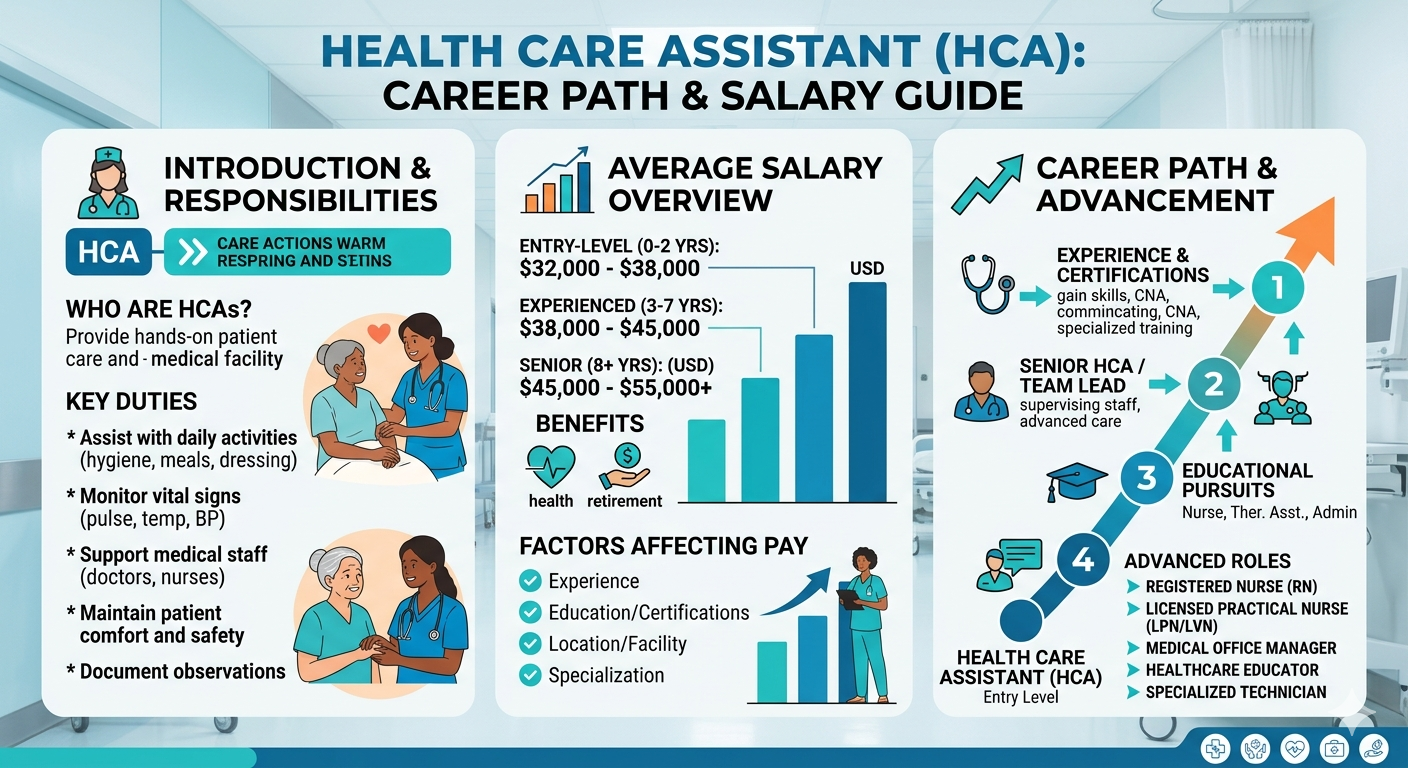
One of the most common responsibilities is assisting patients with personal care activities such as bathing, dressing, eating, and mobility support. Some patients may require help moving from beds to wheelchairs or assistance walking safely. Health care assistants often spend more time with patients than other healthcare workers, making them important providers of emotional and social support.
In hospitals and clinics, health care assistants may check temperatures, monitor blood pressure, record patient information, and prepare medical equipment. They also help maintain cleanliness and organization in patient care areas. In residential care homes, they may support patients with medication reminders and companionship.
The role requires compassion, patience, and strong communication skills. Health care assistants interact with patients who may feel anxious, uncomfortable, or emotionally vulnerable. Providing reassurance and respectful care is a major part of the job.
Although health care assistants work under the supervision of nurses and doctors, they remain a critical part of the healthcare system. Their daily efforts improve patient experiences and contribute to better healthcare outcomes.
Average Health Care Assistant Salary
The salary of a health care assistant depends on several factors, including country, experience level, qualifications, workplace setting, and working hours. In many countries, entry-level health care assistants receive competitive salaries with opportunities for overtime, shift bonuses, and career progression.
In the United Kingdom, beginner health care assistants working within the NHS typically earn a starting salary ranging from £22,000 to £25,000 per year. More experienced assistants or those working in specialized departments may earn higher salaries. Night shifts, weekend work, and overtime can also increase earnings significantly.
In the United States, health care assistants, often called nursing assistants or patient care assistants, can earn between $30,000 and $45,000 annually depending on location and employer. Urban hospitals and private healthcare facilities may offer higher wages than smaller care homes or rural clinics.
In Canada and Australia, salaries are also competitive, especially for certified health care assistants with additional training. Experience plays a major role in salary growth. Professionals who specialize in elderly care, mental health support, or rehabilitation services often earn better wages due to increased demand.
Private healthcare organizations may provide higher salaries than public institutions, although government healthcare systems often offer stronger benefits and job security. Many employers also provide healthcare coverage, pension plans, paid leave, and training opportunities.
Overall, the health care assistant profession offers stable income potential, especially for those willing to gain experience and pursue advanced healthcare qualifications.
Skills Needed to Become a Successful Health Care Assistant
Becoming a successful health care assistant requires both technical abilities and personal qualities. Since the role involves direct interaction with patients, emotional intelligence and communication skills are extremely important.
Compassion is one of the most essential qualities. Patients often face physical pain, emotional stress, or mental health challenges. A caring and supportive attitude helps patients feel more comfortable and respected during treatment.
Communication skills are also critical because health care assistants must interact with patients, nurses, doctors, and family members daily. Clear communication ensures that important information about patient conditions is shared accurately.
Physical stamina is another important requirement. The job often involves standing for long hours, lifting patients, assisting with movement, and handling physically demanding tasks. Good physical health helps assistants manage these responsibilities safely.
Attention to detail is necessary for monitoring patient conditions and recording information correctly. Small changes in a patient’s health may need immediate reporting to medical staff.
Patience and emotional resilience are equally valuable. Healthcare environments can be stressful, especially when dealing with emergencies or emotionally difficult situations. Health care assistants must remain calm and professional under pressure.
Time management skills also help professionals balance multiple responsibilities efficiently. In busy healthcare settings, assistants often care for several patients at once while maintaining high standards of service.
These skills not only improve job performance but also increase opportunities for promotions and career advancement within the healthcare industry.
Education and Qualifications Required
One reason many people choose the health care assistant profession is that the educational requirements are more accessible compared to other medical careers. In many countries, formal university degrees are not mandatory for entry-level positions.
Most employers require basic secondary education along with healthcare-related training or certification. Some healthcare organizations provide on-the-job training for beginners, allowing new employees to learn practical skills while working.
Vocational healthcare courses are highly beneficial for aspiring health care assistants. These programs teach patient care techniques, hygiene procedures, communication skills, first aid, and infection control practices. Completing recognized healthcare certifications can improve job opportunities and salary potential.
In the UK, many employers value qualifications such as the Care Certificate or NVQ in Health and Social Care. In the US, Certified Nursing Assistant (CNA) programs are common pathways into the profession. Canada and Australia also offer specialized healthcare assistant training programs.
Background checks and health screenings are often required because assistants work closely with vulnerable individuals. Some employers may also request CPR certification or basic life support training.
Continuous learning is important in healthcare careers. Many health care assistants attend workshops, complete online courses, or pursue advanced certifications to expand their knowledge and improve career opportunities.
Although the profession is accessible for beginners, gaining additional qualifications can significantly improve earning potential and long-term career growth.
Work Environments for Health Care Assistants
Health care assistants can work in a wide variety of healthcare settings. This flexibility makes the profession appealing because individuals can choose environments that match their interests and career goals.
Hospitals are one of the most common workplaces. In hospitals, health care assistants support nurses and doctors in patient wards, emergency departments, surgical units, and rehabilitation centers. Hospital work is often fast-paced and may involve rotating shifts.
Nursing homes and elderly care facilities are also major employers. In these settings, assistants provide daily support for elderly residents who need help with mobility, hygiene, medication reminders, and companionship. Many professionals find this work deeply rewarding because they build strong relationships with residents.
Home healthcare services are growing rapidly as more patients prefer receiving care at home. Health care assistants visit patients in private residences to provide support with daily activities and monitor health conditions.
Mental health facilities, disability support centers, and rehabilitation clinics also hire health care assistants. Specialized environments may require additional training but often provide valuable experience and higher salaries.
Some assistants work in private healthcare organizations or luxury care facilities where salaries and benefits may be more competitive. Others may choose community healthcare roles that involve supporting patients outside traditional clinical settings.
The wide range of work environments allows health care assistants to explore different areas of healthcare and discover career paths that best suit their interests and strengths.
Career Growth Opportunities in Healthcare
One of the best aspects of becoming a health care assistant is the opportunity for career progression. Many healthcare professionals begin their careers in assistant roles before advancing into specialized or higher-paying positions.
With experience and additional education, health care assistants can become senior care assistants, team leaders, or supervisors. These roles involve more responsibility, leadership duties, and higher salaries.
Some assistants choose to continue their education and become registered nurses, licensed practical nurses, or healthcare managers. Since they already have practical healthcare experience, they often adapt well to advanced medical training.
Specializations also provide growth opportunities. Health care assistants may focus on areas such as dementia care, mental health support, pediatric care, physiotherapy assistance, or palliative care. Specialized training can increase job demand and earning potential.
Healthcare administration is another possible career path. Experienced assistants who develop strong organizational skills may transition into scheduling, patient coordination, or healthcare office management roles.
The healthcare industry values practical experience highly, which means motivated health care assistants can steadily build successful long-term careers. Continuous professional development and certifications greatly improve advancement opportunities.
For individuals seeking job security and career flexibility, healthcare remains one of the strongest industries worldwide.
Challenges Faced by Health Care Assistants
Although the profession offers many rewards, health care assistants also face challenges that beginners should understand. The work can be physically demanding because assistants often spend long hours standing, walking, and supporting patients with mobility needs.
Emotional stress is another challenge. Health care assistants regularly work with patients who may be seriously ill, elderly, or emotionally distressed. Witnessing patient suffering or loss can be emotionally difficult at times.
Work schedules may include nights, weekends, and holidays, especially in hospitals and residential care facilities. Shift work can sometimes affect work-life balance.
Healthcare settings can also become extremely busy during emergencies or staff shortages. Managing multiple responsibilities under pressure requires resilience and strong organizational skills.
Despite these challenges, many professionals remain passionate about the role because of the meaningful impact they make in patients’ lives. Helping patients recover, feel comfortable, or maintain dignity creates a strong sense of purpose and job satisfaction.
Employers increasingly recognize the importance of mental health support and staff well-being. Many healthcare organizations now provide counseling services, wellness programs, and training resources to help employees manage workplace stress effectively.
Why the Demand for Health Care Assistants Is Growing
The demand for health care assistants is increasing globally due to several important factors. Aging populations are one of the biggest reasons. As people live longer, healthcare systems require more professionals to care for elderly patients and individuals with chronic health conditions.
Healthcare services are also expanding rapidly. Hospitals, nursing homes, rehabilitation centers, and home care providers all need trained assistants to support patient care. This growth creates stable employment opportunities for beginners entering the field.
Technological advancements in medicine are allowing more patients to survive illnesses and injuries that previously had lower recovery rates. However, many recovering patients still require long-term support, increasing the need for healthcare assistants.
Governments and healthcare organizations are investing more in community care and home healthcare services. This shift creates additional opportunities outside traditional hospital settings.
The COVID-19 pandemic also highlighted the importance of frontline healthcare workers, including health care assistants. Public awareness of healthcare careers has grown significantly, and many countries are actively recruiting more support staff to strengthen healthcare systems.
As healthcare needs continue to rise, job security for health care assistants is expected to remain strong for many years.
Tips for Building a Successful Career as a Health Care Assistant
Success as a health care assistant requires dedication, professionalism, and a willingness to continue learning. One of the best ways to grow in this profession is by gaining practical experience in different healthcare settings. Exposure to various patient care environments helps professionals build confidence and expand their skill sets.
Strong communication is another key factor for career success. Building positive relationships with patients, families, nurses, and doctors improves teamwork and creates better patient experiences.
Continuous education is highly valuable. Completing additional healthcare certifications and attending training programs can improve career opportunities and salary growth. Employers often prefer candidates who actively invest in professional development.
Maintaining professionalism is equally important. Reliability, punctuality, empathy, and ethical behavior help build trust within healthcare teams.
Networking within the healthcare industry can also open new opportunities. Many professionals discover specialized roles or advanced career pathways through workplace connections and mentorship.
Finally, maintaining emotional and physical well-being is essential. Healthcare work can be demanding, so self-care and stress management play an important role in long-term career satisfaction.
Conclusion
A career as a health care assistant offers stability, purpose, and strong opportunities for personal and professional growth. These healthcare professionals play a critical role in supporting patients, assisting medical teams, and improving the quality of care across healthcare systems worldwide.
The salary potential for health care assistants continues to improve as demand for healthcare services increases. While entry-level wages may vary depending on location and experience, career progression opportunities allow professionals to achieve higher earnings over time.
For individuals who enjoy helping others and want a meaningful career without spending many years in advanced medical education, becoming a health care assistant is an excellent choice. The profession provides valuable experience, job security, and multiple pathways into specialized healthcare roles.
As healthcare systems continue evolving, health care assistants will remain essential contributors to patient care and community well-being. With compassion, dedication, and ongoing learning, professionals in this field can build rewarding and successful long-term careers.